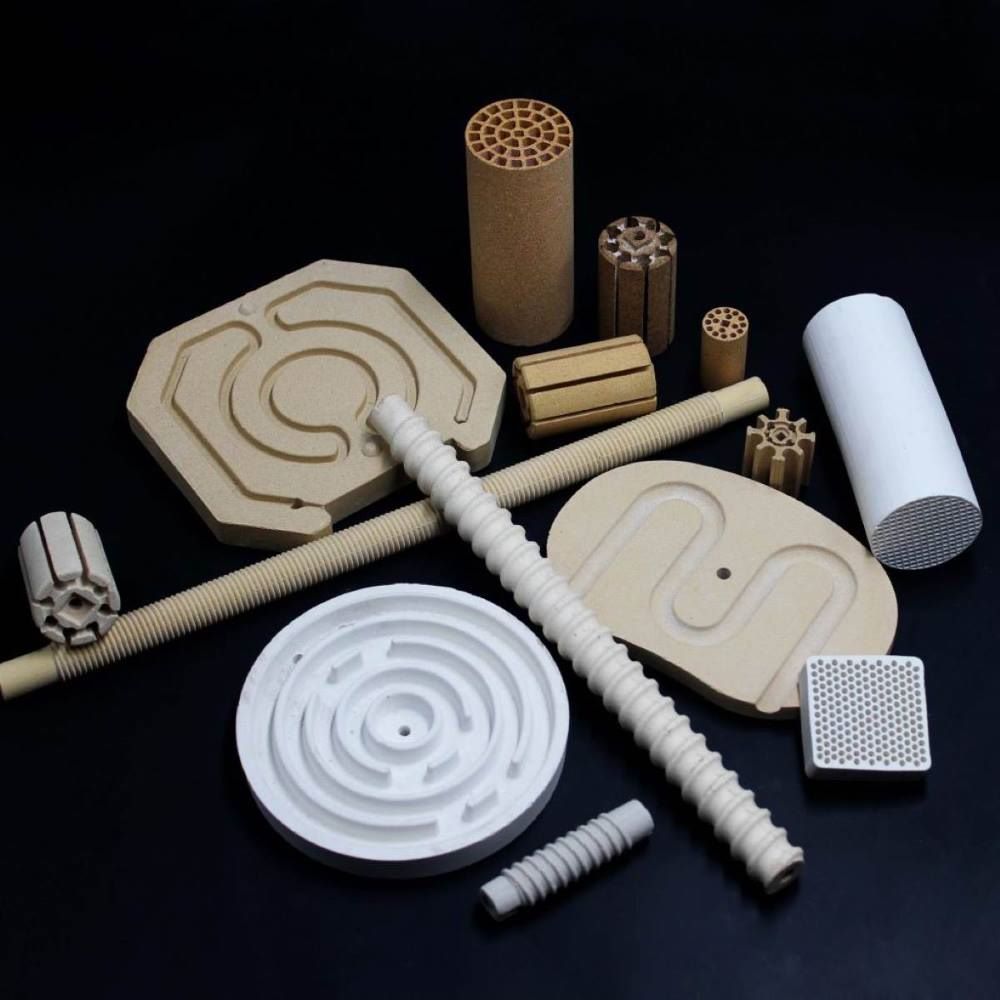
Types and Characteristics of Alumina Ceramics
Types and Characteristics of Alumina Ceramics
Alumina ceramics are a widely used advanced industrial ceramic material, primarily classified into high-purity and ordinary types.
1. High-Purity Alumina Ceramics
High-purity alumina ceramics contain more than 99.9% Al₂O₃, with a sintering temperature ranging from 1650°C to 1990°C. These ceramics have excellent light transmission properties, with a transmittance wavelength of 1 to 6 microns. Due to their high-temperature resistance and corrosion resistance against alkali metals, high-purity alumina ceramics are widely used in various fields. For example, in the glass industry, they are used as a cost-effective replacement for platinum crucibles in molten glass production. In the lighting industry, their light transmission and corrosion resistance make them ideal for manufacturing sodium lamp tubes. Additionally, in the electronics industry, high-purity alumina ceramics are often used as substrates for integrated circuits and as high-frequency insulation materials.
2. Ordinary Alumina Ceramics
Ordinary alumina ceramics are categorized based on Al₂O₃ content into several grades, such as 99%, 95%, 90%, and 85% ceramics. In some cases, ceramics with Al₂O₃ content as low as 80% or 75% are also classified as ordinary alumina ceramics.
-
99% Ceramics: With 99% Al₂O₃ content, these ceramics are mainly used in the production of high-temperature crucibles, refractory furnace tubes, and specialized wear-resistant materials like ceramic bearings, ceramic seals, and water valve discs. These materials are ideal for extreme conditions due to their high-temperature and wear-resistant properties.
-
95% Ceramics: These ceramics, with 95% Al₂O₃ content, are primarily used in corrosion-resistant and wear-resistant components.
-
85% Ceramics: Typically, 85% alumina ceramics are mixed with talc to enhance their electrical and mechanical strength, allowing them to bond with metals like molybdenum, niobium, and tantalum. As a result, 85% ceramics are often used in electrical vacuum devices.
Key Characteristics of Alumina Ceramics
Alumina ceramics hold a significant position in various industrial sectors due to their unique physical and chemical properties. Below are their main characteristics:
1. High Hardness
According to the Shanghai Institute of Ceramics, Chinese Academy of Sciences, alumina ceramics have a Rockwell hardness rating of HRA80-90, second only to diamonds. Their hardness far exceeds that of wear-resistant steel and stainless steel, giving them excellent wear resistance.
2. Exceptional Wear Resistance
Research from the Powder Metallurgy Research Institute at Central South University indicates that alumina ceramics are 266 times more wear-resistant than manganese steel and 171.5 times more wear-resistant than high-chromium cast iron. Based on years of customer feedback, alumina ceramics can extend equipment lifespan by at least tenfold under the same working conditions.
3. Lightweight
Alumina ceramics have a density of 3.5 g/cm³, which is approximately half that of steel, significantly reducing the load on equipment while maintaining high strength.
Technical Specifications of Alumina Ceramics
-
Al₂O₃ Content: ≥92%
-
Density: ≥3.6 g/cm³
-
Rockwell Hardness: ≥80 HRA
-
Compressive Strength: ≥850 MPa
-
Fracture Toughness (KIC): ≥4.8 MPa·m¹/²
-
Bending Strength: ≥290 MPa
-
Thermal Conductivity: ≥20 W/m·K
-
Thermal Expansion Coefficient: 5.0-8.4×10⁻⁶ m/m·K
Conclusion
With its high hardness, exceptional wear resistance, excellent corrosion resistance, and relatively light weight, alumina ceramics are widely applied in various industries. Whether used as high-temperature crucibles or as substrates for electronic devices, alumina ceramics demonstrate their unparalleled advantages across different applications.
Types and Characteristics of Alumina Ceramics
Alumina ceramics are a widely used advanced industrial ceramic material, primarily classified into high-purity and ordinary types.
1. High-Purity Alumina Ceramics
High-purity alumina ceramics contain more than 99.9% Al₂O₃, with a sintering temperature ranging from 1650°C to 1990°C. These ceramics have excellent light transmission properties, with a transmittance wavelength of 1 to 6 microns. Due to their high-temperature resistance and corrosion resistance against alkali metals, high-purity alumina ceramics are widely used in various fields. For example, in the glass industry, they are used as a cost-effective replacement for platinum crucibles in molten glass production. In the lighting industry, their light transmission and corrosion resistance make them ideal for manufacturing sodium lamp tubes. Additionally, in the electronics industry, high-purity alumina ceramics are often used as substrates for integrated circuits and as high-frequency insulation materials.
2. Ordinary Alumina Ceramics
Ordinary alumina ceramics are categorized based on Al₂O₃ content into several grades, such as 99%, 95%, 90%, and 85% ceramics. In some cases, ceramics with Al₂O₃ content as low as 80% or 75% are also classified as ordinary alumina ceramics.
-
99% Ceramics: With 99% Al₂O₃ content, these ceramics are mainly used in the production of high-temperature crucibles, refractory furnace tubes, and specialized wear-resistant materials like ceramic bearings, ceramic seals, and water valve discs. These materials are ideal for extreme conditions due to their high-temperature and wear-resistant properties.
-
95% Ceramics: These ceramics, with 95% Al₂O₃ content, are primarily used in corrosion-resistant and wear-resistant components.
-
85% Ceramics: Typically, 85% alumina ceramics are mixed with talc to enhance their electrical and mechanical strength, allowing them to bond with metals like molybdenum, niobium, and tantalum. As a result, 85% ceramics are often used in electrical vacuum devices.
Key Characteristics of Alumina Ceramics
Alumina ceramics hold a significant position in various industrial sectors due to their unique physical and chemical properties. Below are their main characteristics:
1. High Hardness
According to the Shanghai Institute of Ceramics, Chinese Academy of Sciences, alumina ceramics have a Rockwell hardness rating of HRA80-90, second only to diamonds. Their hardness far exceeds that of wear-resistant steel and stainless steel, giving them excellent wear resistance.
2. Exceptional Wear Resistance
Research from the Powder Metallurgy Research Institute at Central South University indicates that alumina ceramics are 266 times more wear-resistant than manganese steel and 171.5 times more wear-resistant than high-chromium cast iron. Based on years of customer feedback, alumina ceramics can extend equipment lifespan by at least tenfold under the same working conditions.
3. Lightweight
Alumina ceramics have a density of 3.5 g/cm³, which is approximately half that of steel, significantly reducing the load on equipment while maintaining high strength.
Technical Specifications of Alumina Ceramics
-
Al₂O₃ Content: ≥92%
-
Density: ≥3.6 g/cm³
-
Rockwell Hardness: ≥80 HRA
-
Compressive Strength: ≥850 MPa
-
Fracture Toughness (KIC): ≥4.8 MPa·m¹/²
-
Bending Strength: ≥290 MPa
-
Thermal Conductivity: ≥20 W/m·K
-
Thermal Expansion Coefficient: 5.0-8.4×10⁻⁶ m/m·K
Conclusion
With its high hardness, exceptional wear resistance, excellent corrosion resistance, and relatively light weight, alumina ceramics are widely applied in various industries. Whether used as high-temperature crucibles or as substrates for electronic devices, alumina ceramics demonstrate their unparalleled advantages across different applications.
The Comparison Between Ceramic Terminal Block VS Terminal Block
Types, Characteristics, and Applications of Advanced Structural Ceramics